Creativity at the Heart of Development: Highlights from the 5th World Conference on Creative Economy
World Creativity Organization · 27 October 2026
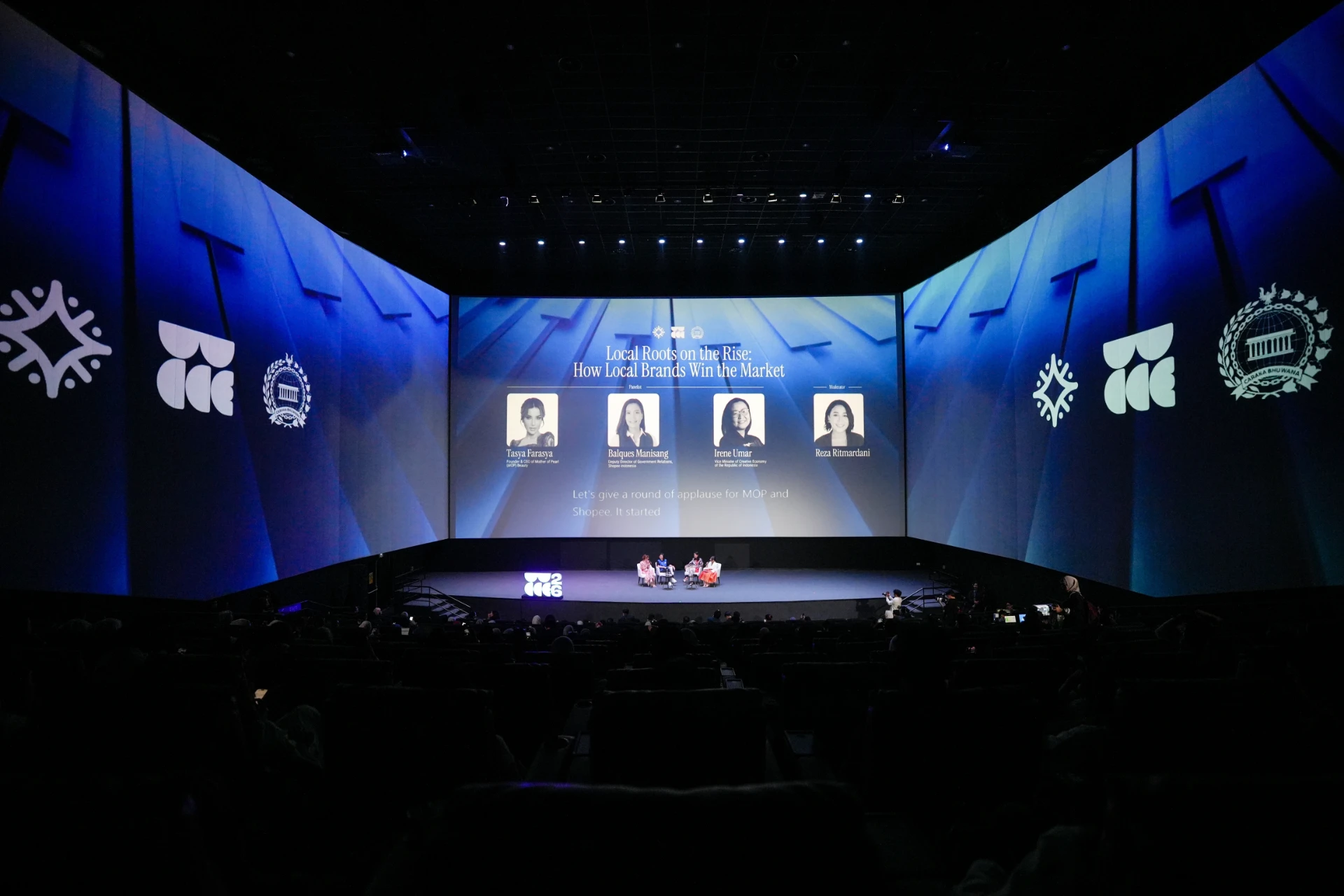
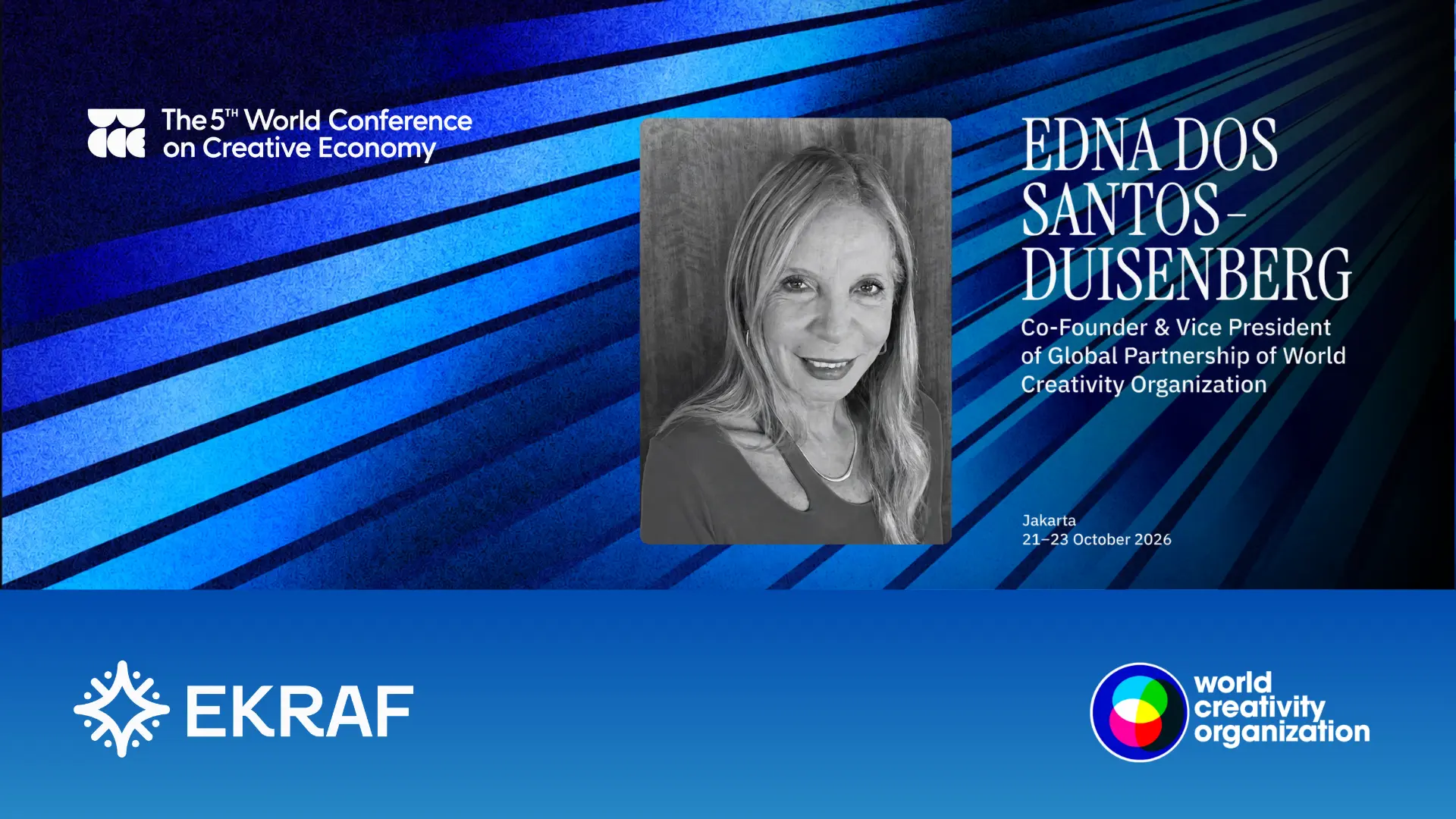
At the fifth World Conference on Creative Economy, governments and creative communities sought a stronger place in the global development agenda. Edna dos Santos-Duisenberg, co-founder of the World Creativity Organization, argued that the next advance depends on the ecosystems that allow creativity to flourish.
São Paulo, 27 October 2026 — A creative idea can travel across borders in seconds. The opportunities it generates rarely move so freely. Between imagination and a sustainable livelihood lie questions of finance, ownership, education, infrastructure and access to markets. Those questions connected the diplomatic negotiations and development debates at the fifth World Conference on Creative Economy, held in Jakarta, Indonesia, from 21 to 23 October.
Convened under the theme “Inclusively Creative: Collective Continuity”, the conference brought together governments, international organisations, businesses, researchers and creative practitioners. Its programme placed artificial intelligence, sustainability, intellectual property and community empowerment within a shared discussion about the future of development. The main conference sessions took place at Hotel Indonesia Kempinski.
For Edna dos Santos-Duisenberg, co-founder and vice-president of the World Creativity Organization (WCO) and former chief of UNCTAD’s Creative Economy Programme, the gathering provided an opportunity to examine a deeper question: what must change for the recognition of creativity’s economic importance to produce more inclusive societies?
Her presentation, “Building an Inclusive Economy: From Creative Economy to Creative Ecosystems”, offered a framework for that transition. It connected the international policy achievements of the past two decades with the practical conditions that creators and communities need today.
The argument was clear. Creativity’s contribution to development depends on the relationships, institutions and opportunities surrounding it.
A conference with a diplomatic destination
Indonesia has made the WCCE a recurring instrument of creative-economy diplomacy. The initiative began in Bali in 2018, followed by editions in Dubai in 2021, Bali in 2022 and Tashkent in 2024. Its return to Indonesia in 2026 continued a sustained effort to bring creative activity into international development discussions.
The immediate diplomatic outcome was the adoption of the Jakarta Vision on Creative Economy. According to the Indonesian Ministry of Creative Economy, participating countries adopted the document at the ministerial meeting following public consultations, international preparatory discussions and the Friends of Creative Economy meeting.
The ministry’s closing account reported 7,639 conference participants, representation from more than 82 countries and seven international organisations, and 183 speakers and moderators. It also announced Glasgow as the host of the 2028 edition. These are figures reported by the organisers.
The Jakarta Vision established priorities for international cooperation, including inclusive access to digital infrastructure, sustainable creative collaboration, fair remuneration, intellectual-property protection and wider access to finance. Its adoption represented an agreement within the conference process. Further action at the United Nations remained an ambition requiring subsequent diplomatic work.
That distinction matters. An international declaration can establish common language and political direction. Its value to a designer, musician, filmmaker or creative entrepreneur ultimately depends on the policies and institutions that follow.
From consultation to common priorities
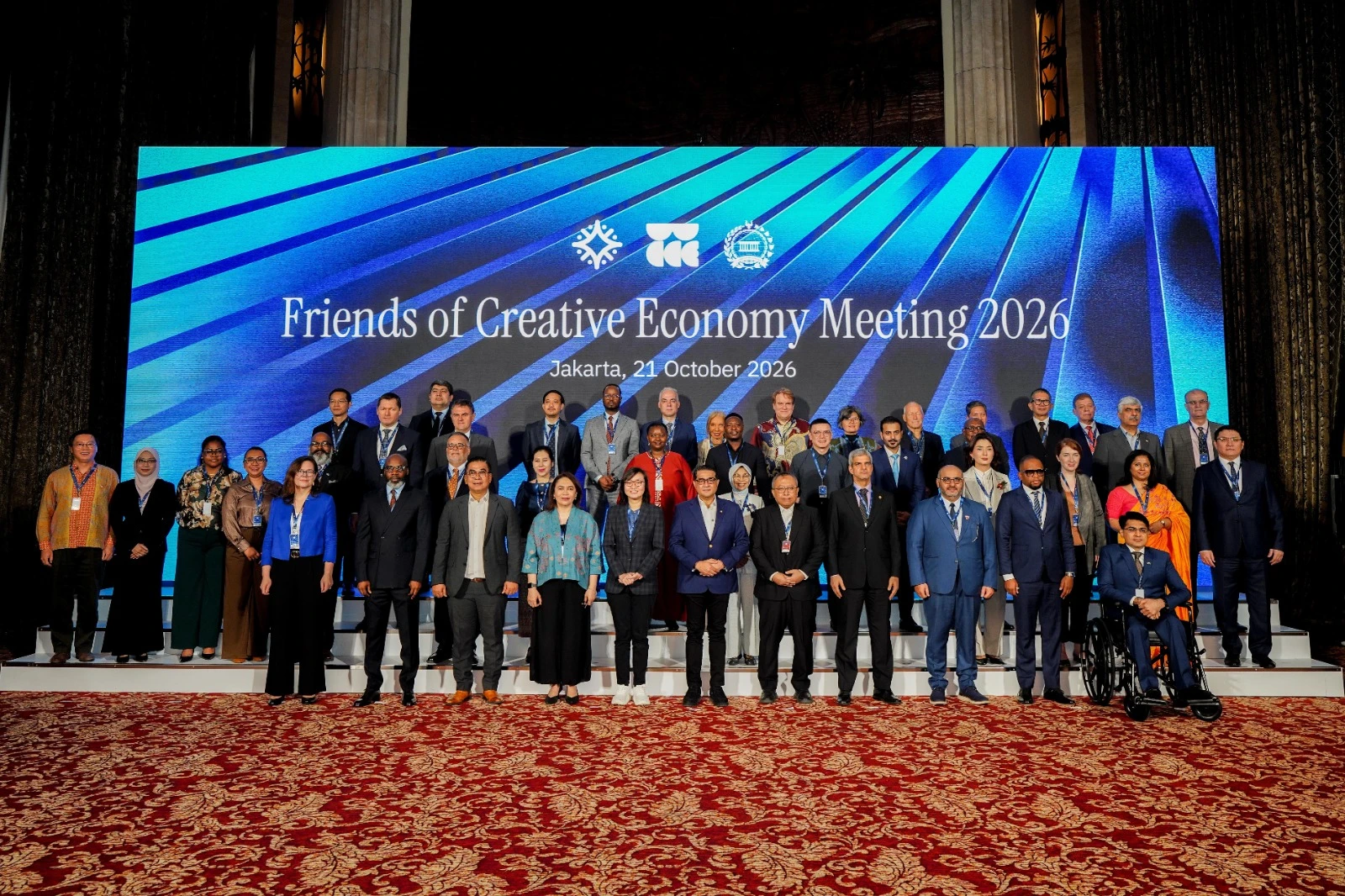
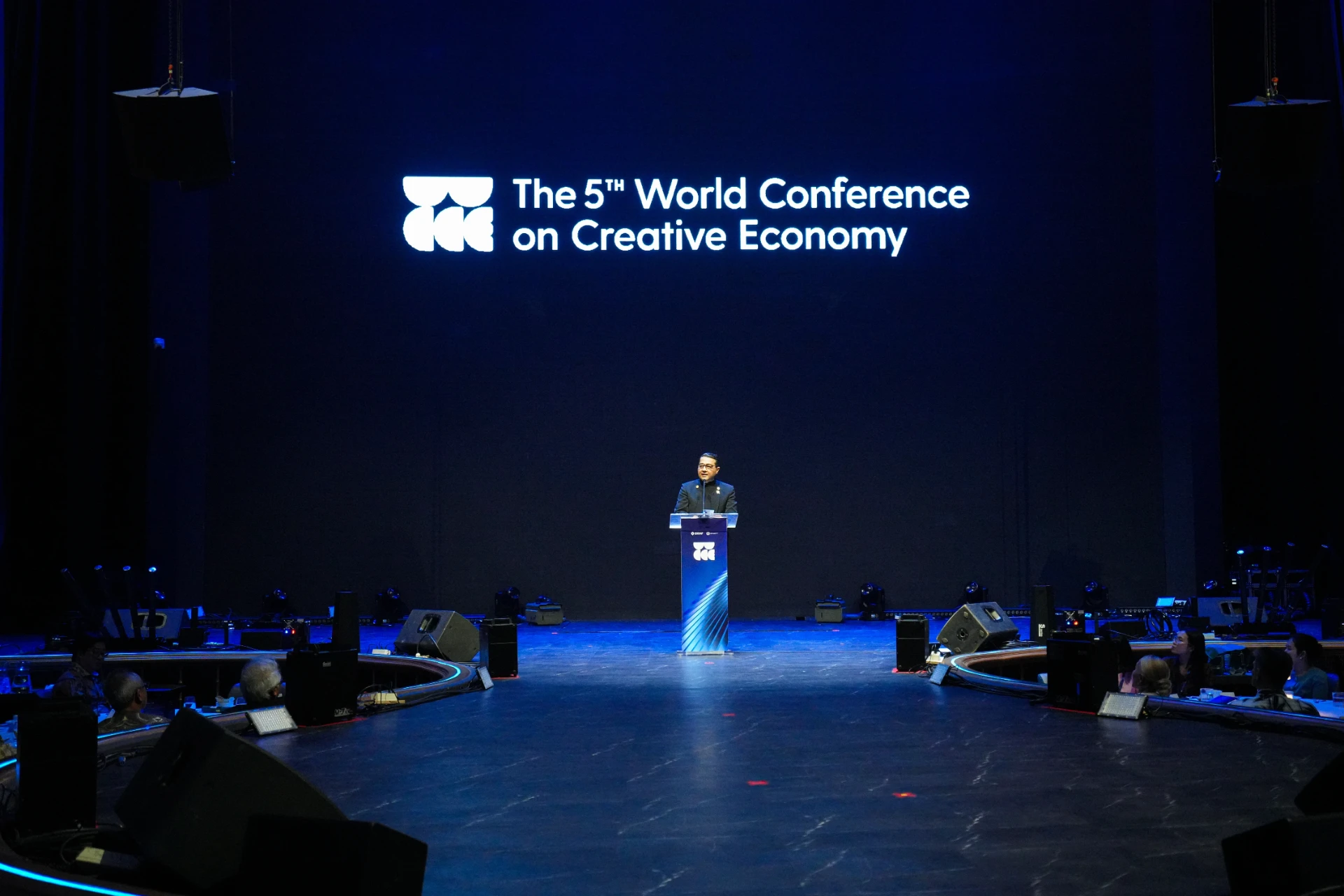
The Friends of Creative Economy meeting on 21 October helped prepare the document for ministerial consideration. The ministry reported participation by 472 people from 64 countries and seven international organisations.
Four issues shaped its discussions: using technology and artificial intelligence to strengthen human creativity; advancing circular and regenerative practices; developing inclusive creative ecosystems; and protecting intellectual property so that creators receive a fairer share of economic value.
Together, these priorities describe a development challenge that crosses conventional policy boundaries. Access to digital tools affects productivity and participation. Ownership affects who benefits from creative work. Sustainability concerns the ways goods and experiences are designed and produced. Inclusion concerns who has the resources and influence to take part.
Indonesia’s stated intention was to carry the discussion beyond the conference and strengthen the position of the creative economy in the global development agenda after 2030.
The analytical challenge is to make those connections operational. A commitment to inclusion becomes more meaningful when it changes access to training, finance, distribution or public decision-making.
This was the ground on which dos Santos-Duisenberg’s contribution was especially relevant.
Edna dos Santos-Duisenberg: from recognition to opportunity
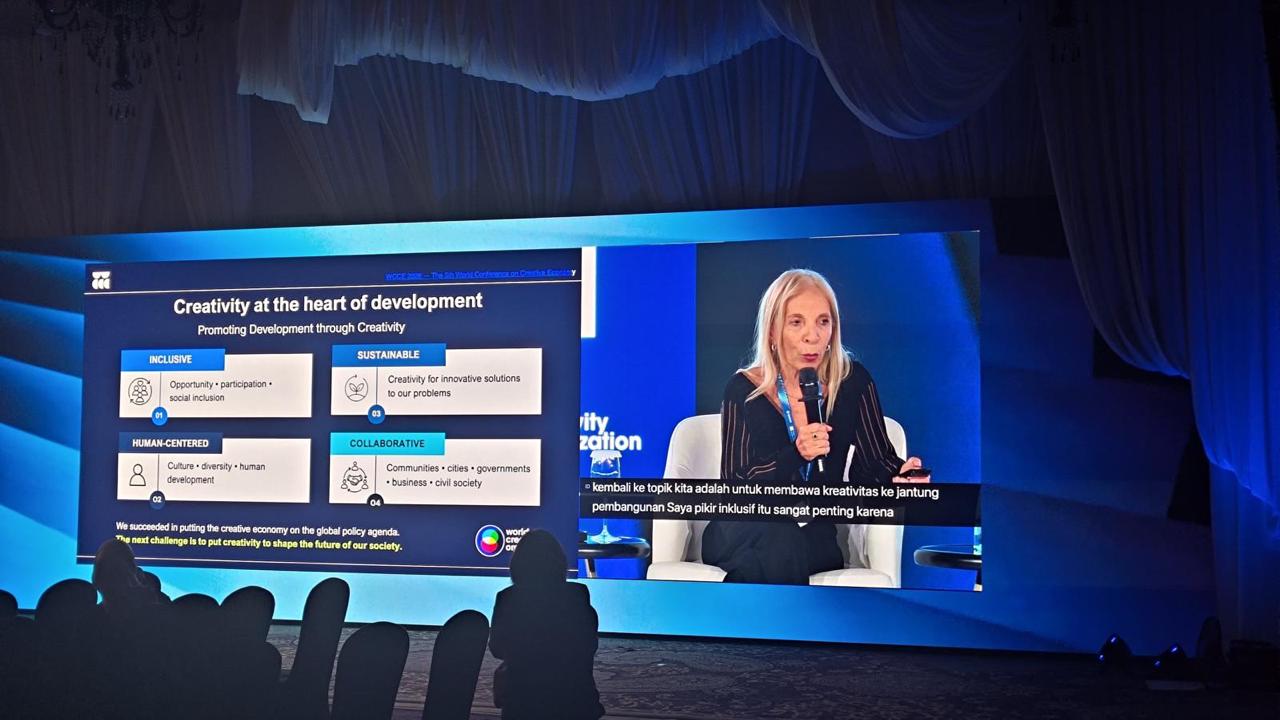
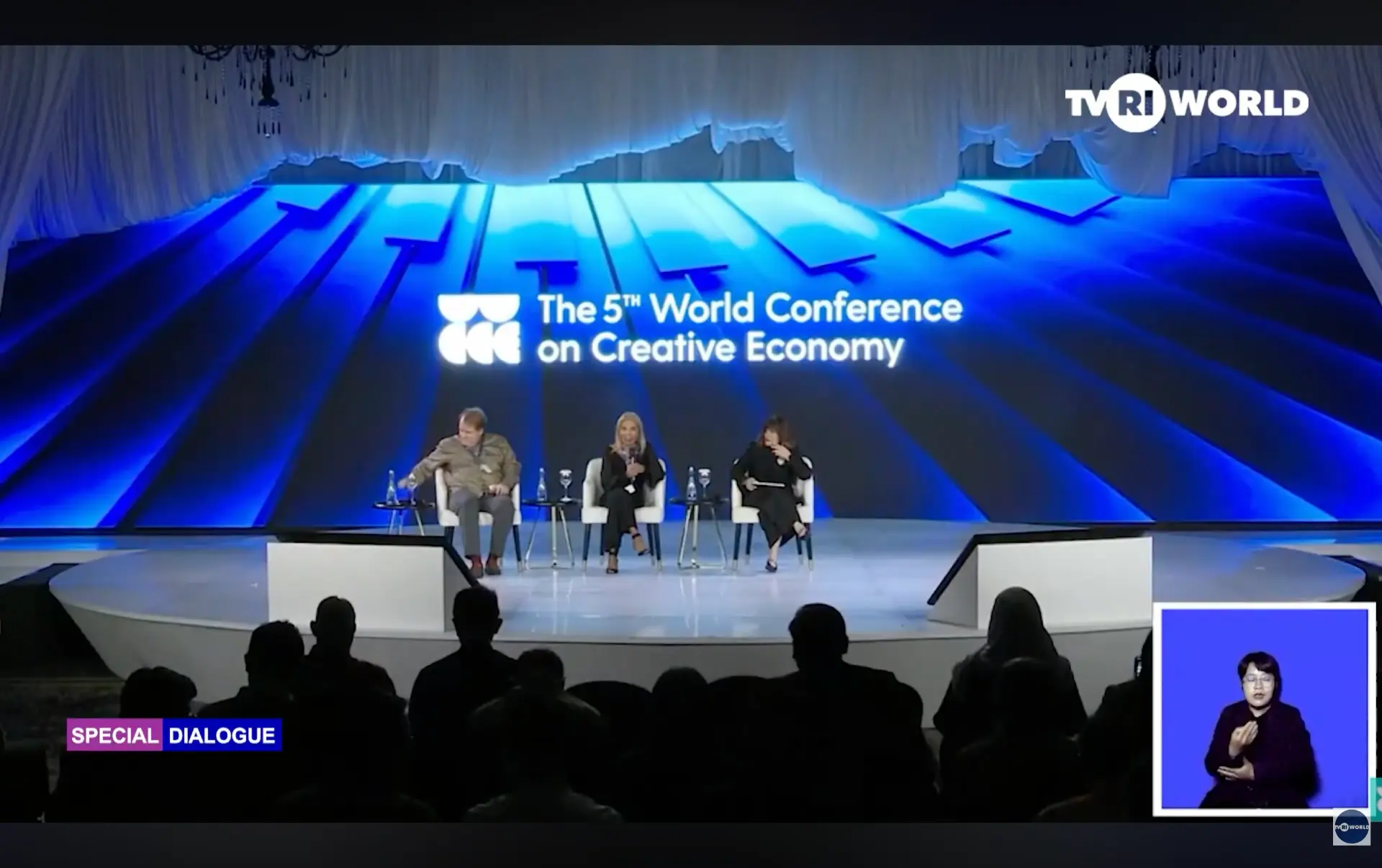
Dos Santos-Duisenberg approached the discussion through the evolution of the creative economy itself.
Her presentation returned to the 2004 São Paulo Consensus, identifying it as an important moment in the international recognition of creative industries as a development concern. She traced the subsequent emergence of UNCTAD’s creative-economy work, United Nations reports and later multilateral milestones.
The historical perspective supported a forward-looking argument. Bringing creativity into international policy discussions was an achievement. The next task is to ensure that it helps shape society’s future.
In her presentation, creativity sits at the intersection of knowledge, culture, technology, trade and inclusion. Development emerges through their interaction. This gives the creative economy a scope extending beyond a collection of industries or a calculation of output.
Her framework connected four dimensions: human imagination and expression; communities and participation; technological transformation; and economic, human and social value.
The consequence is a broader understanding of the ecosystem. Creative activity depends on people, knowledge, culture, technology, institutions, markets and communities working in relation to one another.
For policymakers, this shifts attention towards the conditions surrounding creative production. For organisations, it places greater emphasis on connections between education, enterprise and community life. For creators, it recognises that talent operates within circumstances that can expand or restrict its possibilities.
Talent needs a route to market
One of the presentation’s most practical observations concerned the distance between creative potential and economic opportunity.
Dos Santos-Duisenberg identified five areas that help bridge that distance: skills, finance, markets, partnerships, and digitalisation and artificial intelligence.
Skills development strengthens talent and creative capacity. Finance enables creators and micro and small enterprises to develop their activities. Market access connects local creativity with business opportunities. Partnerships link public and private actors across sectors and communities. Digital tools can support productivity, communication, client relationships and networks.
The framework offers a way to examine why creative potential sometimes remains unrealised. An educational initiative may develop capabilities while leaving participants without customers. A funding programme may support production without addressing distribution. A digital platform may increase visibility while leaving the creator’s business model unresolved.
These are implications of her ecosystem approach: support becomes more effective when its different elements connect.
The same reasoning broadens the discussion of artificial intelligence. In her presentation, digitalisation and AI formed part of the infrastructure of opportunity. Their contribution must be considered alongside skills, enterprise development and participation.
That places human development at the centre of technological change. The relevant question becomes how people can acquire the capabilities and connections to use new tools productively.
Communities as partners in policy
Dos Santos-Duisenberg also proposed a change in the role assigned to communities.
Her presentation contrasted communities understood as beneficiaries with communities participating as policy partners. It called for a transition from isolated initiatives towards collaboration across government, business and civil society.
The distinction has practical consequences. Communities possess knowledge about their own cultural resources, working conditions, institutions and unmet needs. Involving them in policy design can change which problems receive attention and how success is assessed.
Her argument also widened the measures of progress. Economic output remains relevant, but an inclusive creative ecosystem must be examined through its human and social contributions as well.
That invites questions about access, participation and the distribution of opportunity. Who can enter the creative economy? Who can sustain a livelihood within it? Who helps decide its priorities?
For the WCO, her contribution articulated a development perspective in which creativity connects individual capabilities with collective possibilities. It provided a conceptual basis for examining the conference’s wider commitments to inclusion and community empowerment.
Beyond the conference rooms
The Jakarta programme also sought to connect policy discussions with creative practice and commercial exchange.
The announced programme combined plenaries, ministerial and bilateral meetings, business matchmaking and specialised discussions. Alongside it, Creativillage brought exhibitions and creative experiences into the SCBD area, with activities scheduled from 21 to 25 October across several venues. Its programme encompassed fields including art, design, fashion, literature, games, technology and culinary creativity.
Such formats address different parts of the ecosystem. Governments negotiate policy direction; businesses seek partners; creators encounter audiences and potential buyers. Bringing these activities into the same event creates opportunities for connection, although lasting commercial and social benefits require follow-through.
The programme illustrated the range of actors implicated in creative development. It also underscored the coordination needed to connect them.
Taking the agenda into the regions
A further indication of the implementation agenda appeared on 25 October, when Indonesia’s creative-economy minister, Teuku Riefky Harsya, addressed Indonesia Creative Connect.
A ministry communiqué described cooperation with the Indonesia Creative Cities Network (ICCN) as a follow-up to a ten-point regional creative-economy manifesto arising from the WCCE. It reported that the network connected 277 creative-community forums across regencies and cities.
The same event introduced Super Apps 2.0, combining an AI assistant, a services marketplace and links to the Ekraf Academy. Its stated purpose included helping practitioners across 17 creative subsectors find partners and distribution networks.
The initiative offers a concrete example of the institutional questions raised in dos Santos-Duisenberg’s presentation. Networks, education and digital services can help connect local capabilities with wider opportunities. Their effectiveness will depend on participation, sustained use and the quality of the opportunities they enable.
The work after Jakarta
The conference concluded with a common policy document and a further destination for the WCCE process. Indonesia also signalled its intention to pursue the Jakarta Vision through international diplomacy, including discussions at the United Nations.
The next phase will require decisions closer to everyday creative work: how training is funded, how intellectual property is protected, how small enterprises obtain capital and how communities gain a meaningful role in policy.
Dos Santos-Duisenberg’s contribution gives those decisions a coherent frame. A creative ecosystem should connect the ability to imagine with the ability to participate, produce and prosper. Its strength can be judged through the opportunities available to the people within it.
Jakarta advanced the international conversation. Whether its commitments endure will be visible in the institutions, livelihoods and communities they help to build.