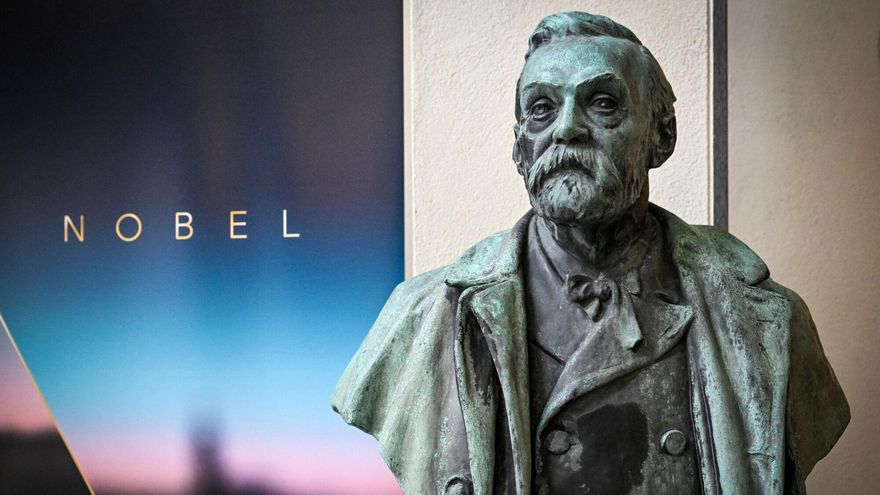
The 2025 Nobel Prize in Economic Sciences was awarded to Joel Mokyr, Philippe Aghion, and Peter Howitt for their decisive contributions to understanding how innovation drives sustained economic growth. The recognition of the theory of “creative destruction” marks a historic turning point: it is the formal acknowledgment, by economic science, that creativity is the true raw material of human progress.
Established in memory of Alfred Nobel, the prize is awarded annually to individuals who make extraordinary contributions to the advancement of humanity. Among all the honored fields, Economics holds a special role: to translate into models, policies, and indicators the invisible forces that drive development. In 2025, that force has a name — creativity.
The Importance of Economic Sciences
Economic Sciences were born from the desire to understand how societies produce, distribute, and renew wealth. Yet throughout the 20th century, most economic models focused on factors such as capital, labor, and natural resources. The work of Mokyr, Aghion, and Howitt reorients this perspective, showing that the engine of modern growth lies not in accumulation, but in invention.
Through mathematical models and historical evidence, the laureates demonstrated that innovation is an endogenous process — meaning it arises within the economic system itself, as a result of the human drive to find better solutions. Sustained growth, therefore, does not depend on external factors (such as resource discoveries or territorial expansion), but on the collective capacity to create, learn, and reinvent.
What Is “Creative Destruction”
The term Creative Destruction, originally coined by Joseph Schumpeter in the mid-20th century, describes the continuous cycle of renewal that drives dynamic economies. Each innovation creates something new — but at the same time, it destroys what came before. Old technologies, business models, and professions are replaced by new ways of producing and living.
Aghion and Howitt transformed this philosophical concept into a formal theory of growth. Mokyr added the historical and cultural dimension: the societies that thrive are those that value knowledge and the freedom to imagine. In his words, “the true Industrial Revolution began when we started to understand why things work — not just how to make them work.”
Creative destruction is not chaos — it is the ritual of economic renewal. It is the process through which the old gives way to the new, ensuring that the system does not collapse through stagnation. It is the mechanism that transforms crisis into opportunity and curiosity into prosperity.
Creativity: The Raw Material of Economic Development
The triumph of the concept of creative destruction in the 2025 Nobel Prize reinforces a central thesis of the World Creativity Organization (WCO): creativity is the most important economic asset for sustainable development in the 21st century.
Founded with the mission of “recognizing creativity as humanity’s most valuable asset,” the WCO has long argued that sustainable development — social, environmental, and economic — depends on the human capacity to imagine new paths.
Just as the Nobel Prize recognizes the role of innovation in growth dynamics, the WCO works to translate this theory into practice by:
- Educating creative leaders through training programs such as the Creative Leadership Program and the Creative Fundraising Program;
- Mobilizing cities and countries around the World Creativity Day, recognized by the United Nations as the World Creativity and Innovation Day (April 21);
- And inspiring public and corporate policies that treat creativity not as a cultural luxury, but as an essential productive resource.
From Theory to Practice: The Economy of Imagination
The recognition of Mokyr, Aghion, and Howitt is also a call to action. If innovation is the engine of growth, then societies must invest in creative education, collaborative environments, and institutions that encourage risk and experimentation — pillars that the WCO has been championing globally.
Creative destruction, when understood responsibly, is the antidote to stagnation.
And creativity, when cultivated with purpose, is the bridge between science and hope — the force capable of balancing economic prosperity, human well-being, and planetary sustainability.
Join the international community of members and professionals of the World Creativity Organization and help build a better future for all.